
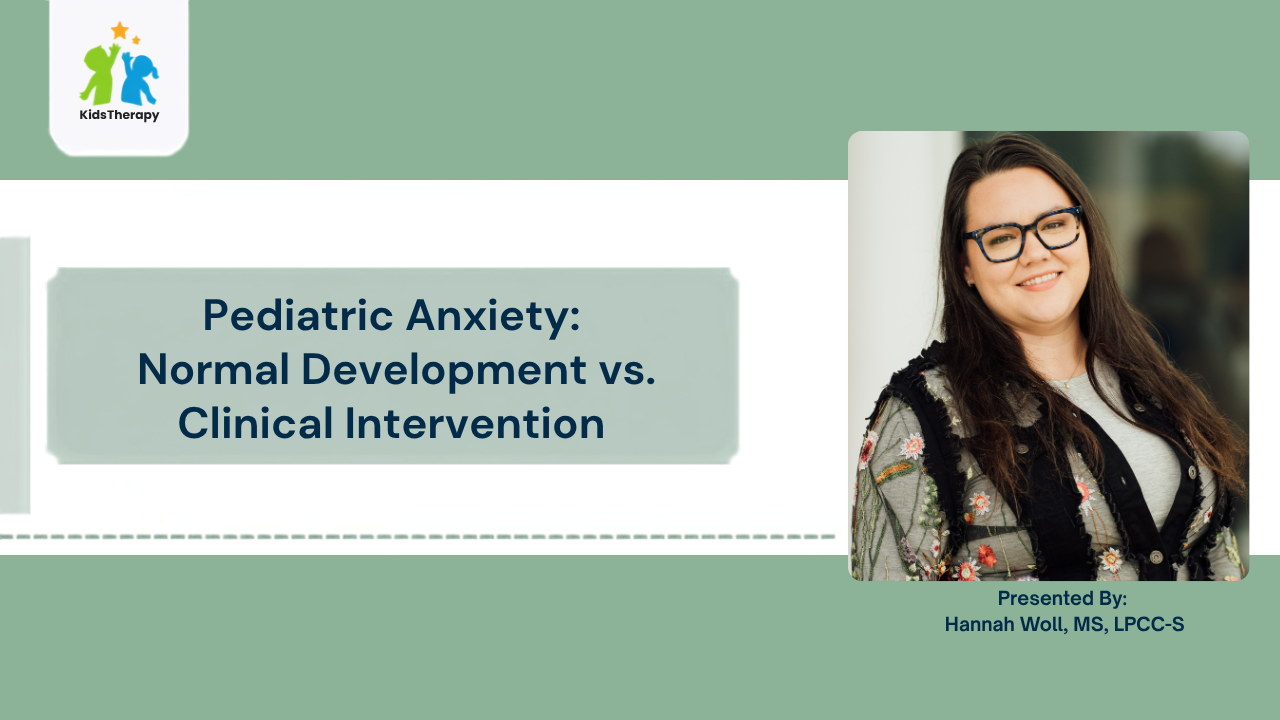
Pediatric Anxiety: Normal Development vs. Clinical Intervention
North Dakota Professionals Coupon Code: Please fill out the eligibility form here
This course is 30 mins in length. It does not qualify for ND SW, LPC, PSYCH
Anxiety is a normal part of childhood development, but knowing when fears and worries have become clinically significant can be challenging. This course gives practitioners a practical framework for recognizing pediatric anxiety and determining when additional support is needed.
Join us for an engaging exploration of how anxiety presents across childhood and adolescence and learn how to distinguish developmentally typical fears from symptoms that may require clinical attention.
You’ll learn how to:
-
Differentiate normal developmental fears and worries from persistent anxiety that causes significant distress or disrupts daily functioning
-
Recognize age-specific presentations of pediatric anxiety, from somatic complaints and school refusal in younger children to panic, social avoidance, and generalized worry in adolescents
-
Assess symptom severity, duration, functional impact, and safety concerns when evaluating anxiety
-
Identify when referral to a pediatric mental health professional or psychiatrist may be appropriate
-
Develop targeted referral strategies based on the child’s presentation and level of need
Turn a complex clinical presentation into a clear, age-informed approach to care.
Whether you work with children, adolescents, or the families who support them, this course will help you recognize when anxiety is part of typical development and when it may be time to connect families with additional support.
Enroll today and strengthen your ability to recognize, assess, and appropriately respond to pediatric anxiety.
Length: 30 mns.
This effort is associated with North Dakota’s Pediatric Mental Health Care Access (PMHCA) Grant, funded by the federal Department of Health and Human Services (DHHS), Health Resources and Services Administration (HRSA), administered through the North Dakota Department of Health and Human Services – Behavioral Health Division.