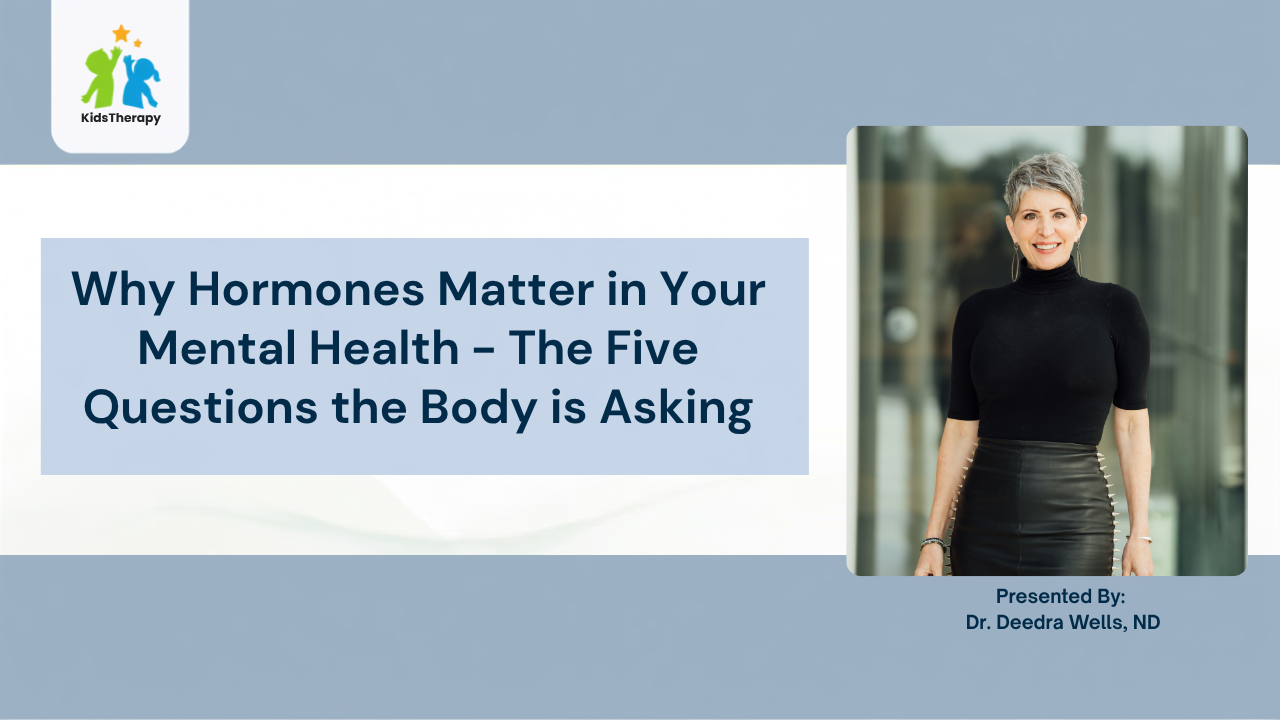
Why Hormones Matter in Your Mental Health - The Five Questions the Body is Asking
North Dakota Professionals Coupon Code: Please fill out the eligibility form here
Low libido, fatigue, and apathy are often dismissed as inevitable parts of aging but common does not always mean normal. This course gives practitioners a practical framework for looking beyond symptoms and exploring the systems that influence energy, hormones, recovery, and connection.
Join us for an engaging exploration of the physiology behind hormonal health and learn how to identify foundational factors that may contribute to common midlife concerns.
You’ll learn how to:
-
Distinguish between symptoms that are common with aging and those that may warrant deeper clinical investigation
-
Apply the five-question framework; Am I safe? Do I have enough? Can I recover? Am I connected? Am I capable? to organize patient presentations
-
Explore the relationship between glucose stability, mitochondrial function, metabolic flexibility, and hormone health
-
Apply a restore-before-replace approach that considers circadian rhythm, sleep, gut health, methylation, and vitamin D
-
Understand how liver detoxification pathways and the gut-liver estrogen loop influence hormone metabolism
-
Explore how COMT patterns may relate to estrogen and testosterone metabolism and emotional recovery
-
Recognize patterns associated with altered cortisol rhythms and understand the role of morning light and circadian support
Turn complex hormone physiology into a practical framework for patient care.
Whether you work with patients experiencing fatigue, low libido, apathy, hormonal transitions, or “wired but tired” symptoms, this course will help you look beyond isolated symptoms and consider the broader physiologic picture.
Enroll today and gain a framework for helping patients understand what their symptoms may be telling them.
This effort is associated with North Dakota’s Pediatric Mental Health Care Access (PMHCA) Grant, funded by the federal Department of Health and Human Services (DHHS), Health Resources and Services Administration (HRSA), administered through the North Dakota Department of Health and Human Services – Behavioral Health Division.