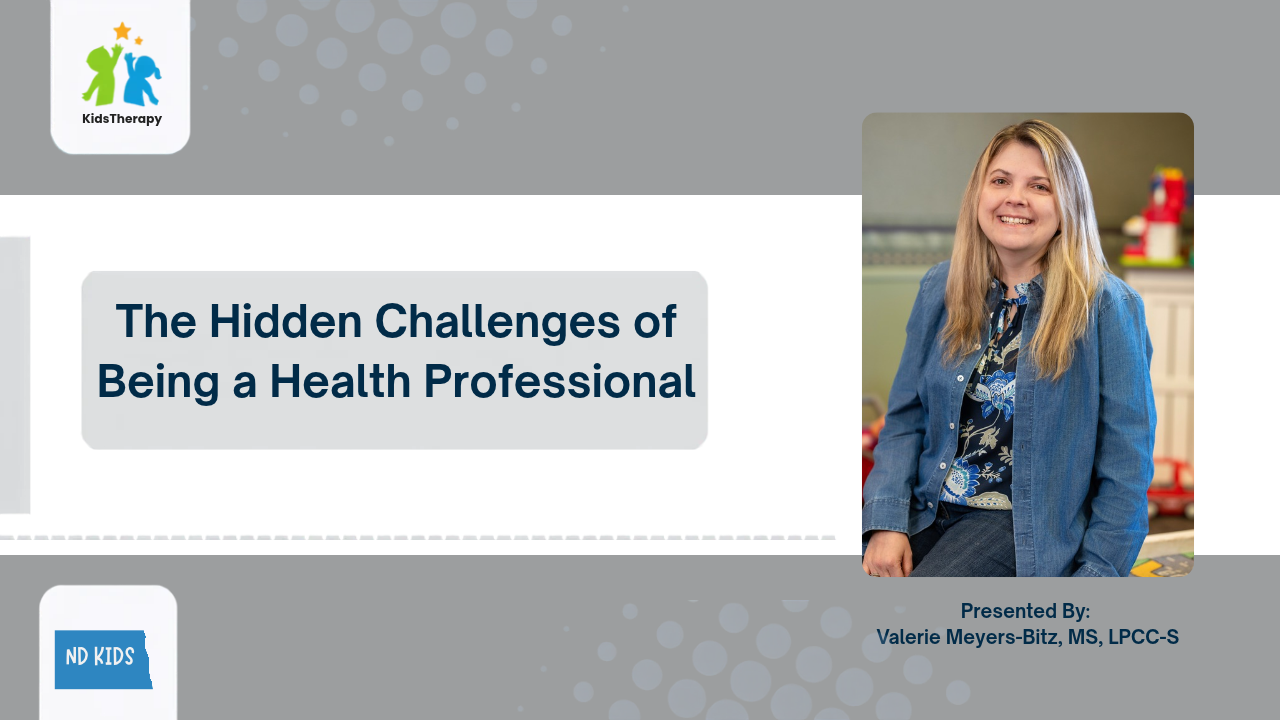
The Hidden Challenges of Being a Health Professional;
Beyond Self-Care: Mind, Body, & Ethics
North Dakota Professionals Coupon Code: Please fill out the eligibility form here
Stress is an inevitable part of working in the health professions, but chronic stress, burnout, and compassion fatigue don’t have to define your career. This course explores the science behind the stress response, the biological factors that influence resilience, and the unique challenges health professionals face while caring for others.
Join us for an engaging exploration of the brain-body connection, occupational stress, and the evidence-based strategies that support recovery, emotional well-being, and long-term professional sustainability.
You’ll learn how to:
- Identify the physical, emotional, and behavioral signs of stress, burnout, secondary trauma, and emotional exhaustion
- Understand how chronic stress affects the brain, nervous system, neurotransmitter activity, and individual stress responses
- Explore how genetics, nutrition, gut health, sleep, movement, and relationships influence stress regulation and resilience
- Recognize early personal warning signs of occupational stress and develop strategies to monitor your well-being
- Understand self-care as an ethical and professional responsibility that supports sound clinical judgment and client protection
- Apply evidence-based lifestyle strategies, including nutrition, sleep hygiene, physical activity, awareness of supplementation, and personal therapy, to support recovery and resilience
Turn the science of stress into practical strategies for building resilience, restoring balance, and sustaining a meaningful career in the health professions.
Enroll today and discover how to move beyond simply managing stress to building the resilience to recover, thrive, and continue caring for others without losing yourself in the process.
This effort is associated with North Dakota’s Pediatric Mental Health Care Access (PMHCA) Grant, funded by the federal Department of Health and Human Services (DHHS), Health Resources and Services Administration (HRSA), administered through the North Dakota Department of Health and Human Services – Behavioral Health Division.